Industrial Drainage Maintenance: Keeping Your Site Compliant and Operational
Industrial sites face complex drainage challenges and strict environmental regulations. Learn how to maintain compliance and avoid operational downtime.
Managing the drainage infrastructure on a large industrial site is a complex, high-stakes responsibility. Unlike domestic or light commercial properties, industrial estates—such as those in Basingstoke, Andover, and the Southampton docks area—must handle vast volumes of water, heavy vehicle traffic, and the constant risk of chemical or trade effluent contamination. Proactive maintenance is not just about preventing blockages; it is a critical component of environmental compliance and operational continuity.
The legal obligations for industrial site operators are stringent. Under the Environmental Permitting Regulations, businesses are strictly liable for any pollution originating from their site. Discharging contaminated water—whether it's oil runoff from a transport yard or chemical effluent from a manufacturing process—into the surface water system or a local watercourse can result in severe fines and prosecution by the Environment Agency.
A key component of industrial drainage is the use of interceptors and oil separators. These large underground tanks are designed to separate hazardous substances, such as fuel and oil, from surface water runoff before it enters the main sewer or watercourse. However, interceptors only function effectively if they are regularly maintained. Over time, the retained oil and silt build up, reducing the tank's capacity. If left unemptied, the interceptor will fail, allowing contaminants to escape. Scheduled emptying and cleaning by licensed waste carriers is a non-negotiable requirement.
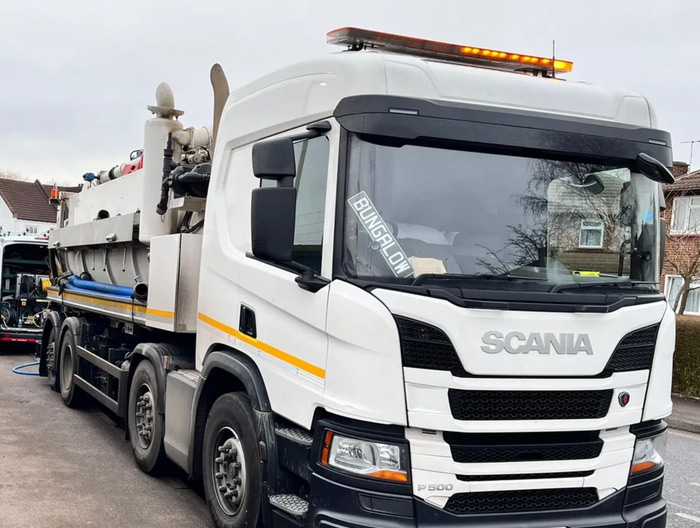
Large industrial sites also present logistical challenges. Multiple, interconnected drainage systems (foul, surface, and trade effluent) require comprehensive mapping and understanding. Access for maintenance can be difficult, requiring specialised equipment such as large-capacity vacuum tankers and high-volume jetting units capable of cleaning large-diameter pipes over long distances.
A robust Scheduled Maintenance Programme is the most effective way to manage these risks. This programme should be tailored to the specific activities of the site. It typically includes scheduled interceptor emptying, regular high-pressure jetting to clear silt and debris from heavy-duty surface water channels, and periodic CCTV surveys of the entire network to identify structural degradation before it leads to a catastrophic collapse under the weight of HGVs.
Even with the best maintenance, emergencies can happen. When a major blockage threatens to halt production or an accidental spill occurs, an immediate response is vital. Partnering with a drainage contractor who offers a genuine 24/7 emergency response, equipped with the heavy plant machinery necessary to handle industrial-scale incidents, is crucial for minimising downtime and mitigating environmental impact.
Need Help Now?
If you are dealing with a drainage emergency or need professional advice, our team is available 24/7.
Send us a message